

India and New Zealand have recently renewed their efforts to establish a Free Trade Agreement (FTA), aiming to significantly bolster bilateral trade and economic relations. After a decade-long hiatus, negotiations resumed following discussions between Indian Prime Minister Narendra Modi and New Zealand Prime Minister Christopher Luxon during the latter’s visit to India starting 16 March 2025.
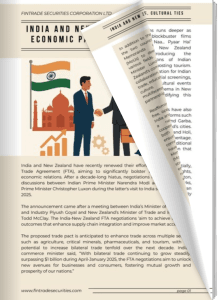
The announcement came after a meeting between India’s Minister of Commerce and Industry Piyush Goyal and New Zealand’s Minister of Trade and Investment Todd McClay. The India-New Zealand FTA negotiations ‘aim to achieve balanced outcomes that enhance supply chain integration and improve market access.’
The proposed trade pact is anticipated to enhance trade across multiple sectors such as agriculture, critical minerals, pharmaceuticals, and tourism, with the potential to increase bilateral trade tenfold over the next decade. India’s commerce minister said, “With bilateral trade continuing to grow steadily, surpassing $1 billion during April-January 2025, the FTA negotiations aim to unlock new avenues for businesses and consumers, fostering mutual growth and prosperity of our nations.”
In addition to the FTA negotiations, the two countries signed several Memoranda of Understanding (MoUs) to deepen cooperation in various fields. New Zealand Prime Minister Luxon emphasized New Zealand’s commitment to expanding collaboration across defense, security, trade, education, tourism, sports, and culture, underscoring the multifaceted nature of the partnership.
Reaffirming their commitment to a free, open, and secure Indo-Pacific, India and New Zealand have entered a new phase of maritime cooperation. As key maritime nations, both countries are focused on ensuring the safety of sea lanes of communication. The two nations have signed the India-New Zealand Memorandum of Understanding (MoU) for Defence Cooperation to strengthen bilateral defence ties, enable regular high-level dialogues, naval exchanges, and joint efforts to enhance maritime security.
Additionally, the two countries entered into agreements in horticulture, forestry, and trade facilitation to boost bilateral trade. Efforts are also underway to explore digital payment cooperation, streamlining economic transactions between the nations. Trade cooperation was further enhanced with the Authorised Economic Operator – Mutual Recognition Agreement (AEO-MRA), signed between India’s Central Board of Indirect Taxes and Customs and New Zealand Customs Service. This agreement will simplify trade processes, reduce barriers, and improve customs cooperation.
Both nations also agreed to a Memorandum of Cooperation on Horticulture to boost collaboration in agricultural practices and knowledge sharing for enhanced sustainability. Additionally, an Education Cooperation Agreement was signed to foster academic exchanges and partnerships, while a Memorandum of Cooperation in Sports was done to strengthen sports ties. Furthermore, New Zealand officially joined the Indo-Pacific Oceans’ Initiative (IPOI) and became a member of the Coalition for Disaster Resilient Infrastructure (CDRI).
A GROWING CULTURAL CONNECTION
The cultural relationship between India and New Zealand extends far beyond mere diplomatic engagements and economic ties. At the heart of this connection lies a vibrant exchange of traditions, art, and entertainment, with cinema playing a central role. And, these cultural ties are increasingly paving way for increased trade and commerce and more opportunities of investment.
Over the years, the Indian film industry has found a deep resonance in New Zealand, not only as a source of entertainment but also as a bridge fostering deeper cultural understanding. This dynamic relationship, however, extends beyond cinema, encompassing music, dance, literature, and an increasing influence of Indian festivals in New Zealand’s multicultural landscape.
India’s powerhouse film industry has long held a special place in the hearts of New Zealand audiences. The grandeur of these movies, their colorful narratives, and emotional depth has captivated both the Indian diaspora and the broader Kiwi population. The connections runs deeper as many Indian blockbuster films such as ‘Kaho Naa… Pyaar Hai’ featured scenic New Zealand landscapes, introducing the country to millions of Indian moviegoers and boosting tourism. The mutual appreciation for Indian films has led to special screenings, film festivals, and cultural events celebrating Indian cinema in New Zealand, further solidifying this artistic bond.
Beyond cinema, India’s traditional and contemporary performing arts have also found an enthusiastic audience in New Zealand. Classical Indian dance forms such as Bharatanatyam and Kathak, alongside folk dances like Bhangra and Garba, have become integral parts of cultural celebrations across New Zealand’s cities. These performances, often showcased during Indian festivals like Diwali and Holi, attract diverse audiences, fostering a greater appreciation for Indian heritage. Additionally, the rise of Indian-origin artists in New Zealand, blending traditional rhythms with contemporary styles, has created a unique musical fusion that enriches the country’s cultural fabric.
The influence of Indian festivals in New Zealand has grown exponentially, reflecting the country’s embrace of multiculturalism. Diwali, the festival of lights, has become a national celebration, with major cities like Auckland, Wellington, and Christchurch hosting grand events featuring cultural performances, fireworks, and traditional Indian cuisine. These events, attended by both the Indian community and Kiwis from various backgrounds, highlight the cultural inclusivity of New Zealand and its willingness to partake in Indian traditions.
Culinary culture forms another strong pillar in the Indo-Kiwi cultural exchange. Indian cuisine, renowned for its diversity and bold flavors, has become a staple in New Zealand’s food scene. From authentic street food to fine dining experiences, Indian restaurants have flourished, catering to both Indian expatriates and local New Zealanders eager to explore rich, aromatic dishes. The growing popularity of plant-based diets has also seen Indian vegetarian cuisine gain traction, further reinforcing the adaptability and appeal of Indian gastronomy in New Zealand.
This burgeoning acceptance transcends mere dining preferences, forging lucrative trade corridors and investment prospects between the two nations. The demand for Indian pulses, spices, and plant-based alternatives has catalyzed new business avenues, positioning India as a key player in New Zealand’s evolving food industry. In turn, local entrepreneurs are capitalizing on this culinary evolution, curating plant-forward menus that celebrate India’s gastronomic heritage while catering to modern sensibilities.
Ultimately, the symbiotic relationship between India’s vegetarian bounty and New Zealand’s appetite for sustainable dining underscores a larger shift—one where tradition and innovation harmoniously converge, creating a fertile ground for cultural exchange, economic collaboration, and an ever-expanding gastronomic repertoire.
The literary landscape has also witnessed growing Indo-Kiwi exchanges. New Zealand has seen a rise in Indian-origin authors who bring forth narratives that blend elements of Indian culture with Kiwi experiences. Writers explore themes of migration, identity, and cultural integration, providing valuable insights into the lived experiences of the Indian diaspora. Education and academia serve as another crucial link in the cultural relationship. Indian students increasingly choose New Zealand for higher education, bringing with them diverse perspectives and traditions that contribute to the country’s academic environment.
Sport is yet another avenue where cultural ties are reinforced. While cricket remains a shared passion, with both nations displaying immense respect for each other’s sporting prowess, other sports such as hockey and football are gradually fostering competitive camaraderie. Beyond competitive matches, cricket has facilitated significant sports diplomacy. New Zealand Cricket (NZC) and the Board of Control for Cricket in India (BCCI) have actively engaged in player exchanges, coaching collaborations, and grassroots development programs. The exchange of skills and expertise enriches both cricketing cultures, ensuring continued excellence on the global stage and bolstering sports economy, employment opportunities and investment avenues.
Sports activities and exchanges foster not only talent development but also commercial opportunities, including sponsorships, sports tourism, and cross-border investments in training academies and leagues. As digital engagement and media coverage enhance global visibility, these sporting interactions will continue to strengthen bilateral relations, creating long-term growth prospects in both the athletic and economic sectors.
Fintrade Securities acknowledges the deepening cultural ties between India and New Zealand as a vital factor complementing economic and diplomatic relations. The influence of films, alongside Indian festivals, cuisine, literature, and performing arts, has not only strengthened the Indian diaspora’s connection to its roots but has also enriched New Zealand’s multicultural fabric. These cultural exchanges create opportunities in sectors such as tourism, education, and entertainment, fostering a more inclusive and interconnected society and shaping growth and economy of both nations.
REDEFINING TRAVEL AND HOSPITALITY
Tourism has long been a defining aspect of India and New Zealand’s economies, drawing millions of visitors each year to their breathtaking landscapes, cultural treasures, and immersive experiences. While India captivates travellers with its centuries-old heritage, vibrant festivals, and diverse landscapes, New Zealand offers pristine natural beauty, adventure tourism, and a unique Maori cultural heritage. Despite their geographical separation, both nations have found ways to collaborate, share tourism expertise, and redefine hospitality to cater to an evolving global traveller.
New Zealand’s appeal as a tourist destination lies in its unparalleled natural beauty. From the snow-capped peaks to the tranquil fjords, geothermal wonders, and rolling green pastures, the country is a haven for nature lovers and adventure seekers. The tourism sector, which contributes significantly to New Zealand’s economy, thrives on eco-tourism, outdoor recreation, and luxury travel. Activities such as bungee jumping, skiing, hiking, and whale watching attract global tourists seeking an adrenaline rush amidst stunning scenery.
India, on the other hand, offers a vastly different but equally compelling experience. As one of the world’s oldest civilisations, India’s tourism industry is deeply rooted in history, spirituality, and cultural diversity. The country’s architectural marvels, from the Taj Mahal to the ancient temples of Tamil Nadu, draw history enthusiasts, while its bustling cities, vibrant markets, and traditional arts create an immersive experience for cultural travellers. The diversity of landscapes—from the Himalayas to the backwaters of Kerala—ensures that every traveller finds a unique experience.
Over the years, India and New Zealand have strengthened their tourism ties through bilateral agreements, tourism promotion initiatives, and airline connectivity. As travel between the two countries has increased, efforts to facilitate easier visa processes and direct flights have gained momentum. The introduction of digital travel platforms, enhanced marketing campaigns, and tourism exchange programmes have further bolstered visitor numbers from both sides.
One of the most significant aspects of Indo-Kiwi tourism collaboration is in the realm of sustainable tourism. Both nations have recognised the need to balance tourism growth with environmental preservation. New Zealand, with its strong commitment to eco-tourism, has implemented policies that protect its natural reserves, promote low-impact travel, and encourage sustainable hospitality practices. India, too, has embraced sustainable tourism initiatives, from promoting eco-resorts in the Himalayas to encouraging responsible wildlife tourism in national parks. The shared commitment to conservation ensures that travellers can enjoy these destinations while preserving them for future generations.
Cultural tourism has also played a vital role in strengthening Indo-Kiwi ties. The growing interest in Indian culture among New Zealanders is evident in the popularity of Bollywood movies, Indian cuisine, and festivals such as Diwali, which are celebrated with enthusiasm across New Zealand. Indian tourists visiting New Zealand often seek out Maori cultural experiences, intrigued by the indigenous traditions that bear similarities to India’s own rich tribal heritage. The exchange of cultural knowledge through tourism not only fosters mutual appreciation but also deepens people-to-people ties between the two nations.
Adventure tourism is another area where India and New Zealand complement each other. While New Zealand is famous for extreme sports and adventure activities, India has been steadily growing as a destination for adventure enthusiasts. The Indian Himalayas offer world-class trekking, river rafting, and mountaineering experiences, while the coastal regions provide opportunities for scuba diving and paragliding. Collaborations in adventure tourism have led to knowledge sharing on safety standards, training programmes, and joint promotional activities, ensuring that both nations continue to attract thrill-seeking travellers.
Film tourism has emerged as a key driver of travel between the two countries. New Zealand’s stunning landscapes have been immortalized in global cinema, most notably in films like The Lord of the Rings. Similarly, Indian filmmakers have increasingly chosen New Zealand as a shooting destination for Indian films, showcasing the country’s picturesque settings to millions of Indian moviegoers. This exposure has translated into increased Indian tourist arrivals, eager to explore the locations seen on screen. Tourism boards from both nations have capitalised on this trend by organising guided tours of famous film locations, further boosting travel interest.
As the world recovers from the disruptions caused by the COVID-19 pandemic, the tourism industry in both India and New Zealand is witnessing a resurgence. The focus is now on enhancing travel safety, improving connectivity, and promoting experiential tourism. Luxury tourism, wellness retreats, and digital nomad-friendly destinations are gaining popularity, with both countries positioning themselves as attractive options for travellers seeking meaningful and immersive experiences.
India and New Zealand have immense potential to further collaborate in the tourism and hospitality sector. Initiatives such as joint tourism promotions, direct flight connections, and training programmes for hospitality professionals can strengthen bilateral ties. Additionally, the rise of technology in tourism—such as virtual reality travel experiences, AI-driven trip planning, and digital tourism marketing—presents new opportunities for innovation in the sector.
Ultimately, the tourism relationship between India and New Zealand is not just about travel—it is about storytelling, cultural exchange, and shared experiences. As both nations continue to redefine travel and hospitality, their collaboration in sustainable tourism, adventure tourism, film tourism, and cultural exchanges will play a crucial role in shaping the future of the industry. Through mindful and innovative approaches, India and New Zealand are not only attracting global travellers but also setting new benchmarks for responsible and enriching travel experiences.
Fintrade Securities views the growing Indo-Kiwi tourism collaboration as a strategic move that strengthens economic ties while redefining travel and hospitality in a post-pandemic world. India’s cultural and historical depth, combined with New Zealand’s adventure and eco-tourism expertise, creates a dynamic synergy that attracts global travellers. The focus on sustainable tourism, digital travel solutions, and experiential hospitality aligns with emerging market trends, offering long-term investment potential in travel infrastructure, aviation, and hospitality technology. As both nations continue to innovate in tourism and luxury travel, their partnership stands as a model for resilient and future-ready tourism economies.
India And New Zealand Forge New Economic Paths, Cultural Ties