
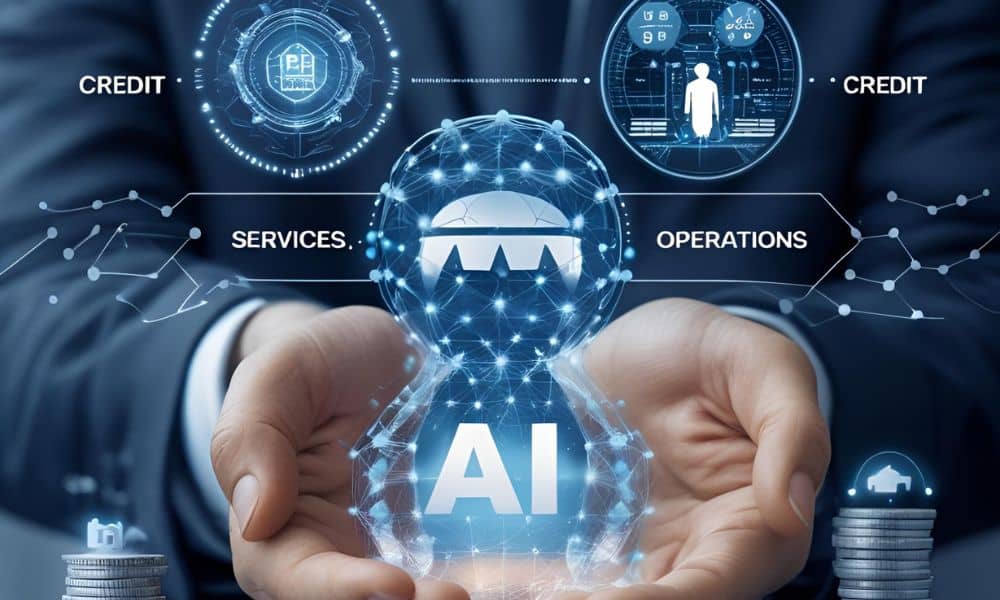
In the evolving world of banking, artificial intelligence (AI) has emerged not as a mere tool but as a revolutionary force, reshaping the core functions that underpin the industry. The traditional banking system, once reliant on manual intervention and limited automation, has found in AI a vehicle of transformation that touches everything—from customer service to risk assessment and backend operations. These changes are not just incremental; they are seismic, marking the beginning of an era where efficiency, personalization, and predictive capabilities redefine how financial institutions operate and engage with their customers.
The world of customer service has always been a cornerstone of banking. However, traditional models have struggled to balance personalization with efficiency, often resorting to call centres and manual processes that could be slow, impersonal, and prone to human error. In this context, AI has acted as a catalyst for a more intelligent, responsive, and efficient customer service experience.
Chatbots and virtual assistants are the most visible manifestations of AI’s role in customer service. These AI-driven agents are designed to manage an increasing volume of customer inquiries and requests, without the need for human agents to be involved in every interaction. What sets these tools apart is their ability to understand natural language, process complex queries, and provide real-time responses that feel personal and relevant. Unlike traditional automated systems that might offer scripted responses, AI-driven systems adapt and learn from each interaction, enhancing their ability to provide meaningful solutions over time.
The key advantage of AI in this domain is its scalability. For banks, offering 24/7 customer support is no longer a logistical nightmare. Whether it’s answering simple queries about account balances, resolving complex billing disputes, or offering financial advice, AI can handle an enormous range of tasks simultaneously, all while reducing wait times and operational costs. Customers no longer need to wait in queues or navigate through a maze of options in automated phone systems; they can interact with an AI that understands their needs and can offer precise solutions immediately.
But customer service is not just about answering questions—it’s about anticipating needs. AI in banking doesn’t simply respond to queries; it can predict customer needs based on previous interactions and behaviour patterns. For instance, if a customer frequently checks their account balance at the start of each month or often inquires about savings plans, AI can proactively send notifications or suggest personalized products that may align with the customer’s financial goals. This predictive capability transforms customer service from a reactive process into a proactive one, where banks can anticipate challenges and offer tailored solutions before problems arise.
This shift also allows financial institutions to provide a more personalized experience. Rather than offering the same generic solutions to all customers, AI can use data analytics to understand an individual’s preferences, financial habits, and objectives. Based on this data, it can suggest products, services, or strategies that fit the customer’s unique profile. Such personalization not only builds stronger customer relationships but also fosters a sense of trust, as clients feel understood and valued.
CREDIT SCORING, RISK ASSESSMENT & SCALE EFFICIENCY
Beyond the front-end operations, AI is also revolutionizing how banks assess credit risk and make lending decisions. Traditional credit scoring systems have relied on static criteria like credit history, income levels, and outstanding debts to evaluate a borrower’s ability to repay loans. While these factors remain relevant, they fail to capture the dynamic nature of an individual’s financial situation. More importantly, these systems are not always equitable, as they can inadvertently exclude individuals with limited credit histories or those who operate in less conventional financial spaces.
AI addresses these shortcomings by expanding the pool of data points considered in credit scoring. Through machine learning algorithms, AI can analyse a wider array of factors that go beyond traditional metrics—social data, spending habits, even job stability. It can identify patterns and correlations that humans might miss, providing a more nuanced and accurate picture of a person’s financial reliability. In this sense, AI not only makes lending decisions more precise but also more inclusive, helping individuals who may have been previously excluded by traditional systems.
AI’s application in credit scoring is particularly useful in identifying and mitigating risk. While traditional credit assessments often rely on historical data to predict future behaviour, AI can dynamically adjust its risk models in real-time. As new data emerges—whether it’s a change in an individual’s spending habits, a shift in the broader economy, or a new financial event—AI can update its models instantly, recalibrating risk factors and adjusting credit limits or interest rates accordingly. This flexibility helps banks stay ahead of market fluctuations and reduce the likelihood of defaults, creating a safer and more stable lending environment.
Moreover, AI enables real-time credit scoring. In the past, credit checks were a cumbersome process that took days, if not weeks, to complete. AI’s ability to process large volumes of data at lightning speed means that credit assessments can now happen instantly, providing a seamless experience for customers. Borrowers can know almost immediately whether they qualify for a loan, eliminating the anxiety and waiting time that previously accompanied the application process.
Perhaps most importantly, AI can also help banks detect fraudulent activity in the credit scoring process. Using pattern recognition algorithms, AI can identify unusual activities that may signal identity theft, fraudulent loan applications, or falsified credit reports. By catching these risks early, AI helps safeguard both the bank and its customers from potential harm, preventing significant losses and reinforcing trust in the financial system.
While AI’s influence on customer-facing services and credit assessments is often the most visible, its impact on backend operations is equally profound, albeit less publicized. In many ways, backend operations are the lifeblood of a bank’s functioning. These include everything from transaction processing, compliance checks, and fraud detection to data management and reporting. Traditionally, these processes were manual, time-consuming, and prone to errors. But AI is ushering in a new era of hyperautomation, where even the most complex tasks are automated, streamlined, and optimised.
Hyperautomation refers to the use of AI, machine learning, robotic process automation (RPA), and other technologies to automate a vast range of tasks across an organisation. In banking, this can mean automating everything from routine back-office operations like data entry and reconciliation to more complex tasks such as regulatory compliance and reporting. The potential of hyperautomation is vast, reducing costs, improving accuracy, and enabling financial institutions to focus on more strategic objectives.
One of the major benefits of AI-powered hyperautomation is its ability to handle repetitive and time-consuming tasks that were once prone to human error. Take the example of transaction processing: in traditional systems, each transaction would need to be manually checked and reconciled, a process that could take days. With AI, this is automated, allowing transactions to be processed in real-time, freeing up resources for more critical functions. Banks can process thousands or even millions of transactions simultaneously, without sacrificing accuracy or speed.
Similarly, regulatory compliance, which has become increasingly complex in recent years, is another area where hyperautomation shines. Banks are required to comply with a host of regulations, ranging from anti-money laundering (AML) and know-your-customer (KYC) protocols to reporting requirements for taxation and financial disclosures. AI systems can be programmed to track regulatory changes, monitor compliance, and automatically generate reports, ensuring that banks are always up-to-date and compliant with the latest standards.
The automation of such processes doesn’t just save time; it reduces the risk of human error. Given the complexity of financial transactions and regulations, even a minor mistake can result in significant financial or reputational damage. AI, with its precision and scalability, drastically reduces the chances of such errors occurring.
BALANCING INNOVATION WITH RESPONSIBILITY
As the banking sector continues to integrate AI into its core operations, the potential benefits are undeniable. From enhanced customer service and more inclusive credit scoring to hyperautomated backend operations, AI is reshaping every facet of the financial ecosystem. However, this evolution is not without its challenges.
First and foremost is the issue of trust. While AI promises greater efficiency and personalisation, it also raises concerns about data privacy and algorithmic bias. As AI systems become more integrated into the decision-making process, ensuring that they are transparent, fair, and accountable will be critical. Banks must strike a delicate balance between harnessing the power of AI and ensuring that their customers’ data is protected and used ethically.
Moreover, as AI continues to automate more processes, there’s the question of human oversight. While machines may be more efficient and accurate, there will always be a need for human judgment, especially in complex or ethical situations. Banks must ensure that AI is used as a complement to human expertise, not a replacement for it.
Lastly, the regulatory environment must evolve alongside AI. As AI technologies become more widespread, regulators will need to update existing frameworks to ensure that AI systems are not only effective but also compliant with financial laws and standards. This will require collaboration between financial institutions, technology companies, and regulatory bodies to create guidelines that ensure AI is used responsibly.
As the banking industry embraces AI, it is not merely adopting a series of technological upgrades. Rather, it is transitioning into a new era where the very foundations of financial services are being reimagined. What began as an experiment in automating simple tasks is now a comprehensive revolution touching almost every operational facet of the sector. The seamless integration of AI in banking is not just about reducing costs or improving efficiency; it is about fundamentally transforming how financial services are delivered, ensuring they meet the evolving demands of an increasingly tech-savvy and dynamic customer base.
One of the most significant areas AI is poised to transform is the very nature of financial products and services. As banks leverage AI’s ability to analyze vast datasets and predict customer behaviour, they can create highly personalized financial products tailored to the unique needs and preferences of each individual. Instead of offering a standard set of products that treat all customers the same, AI allows for customization on an individual level, ensuring that each financial product is relevant and meaningful.
For instance, mortgage rates, loan terms, and even investment options can be dynamically adjusted based on a customer’s financial situation, transaction history, and even their long-term goals. AI-powered systems can assess an individual’s financial health more accurately than traditional methods, offering solutions that are more aligned with their ability to repay loans or make investments. This, in turn, fosters deeper customer loyalty, as individuals feel that their financial institution understands their specific circumstances and is providing the right tools to help them achieve their goals.
Beyond personalisation, AI can democratize access to financial services, breaking down the barriers that often exist between people and the services they need. In many parts of the world, individuals may be excluded from mainstream financial products due to lack of credit history or access to traditional banking channels. AI’s ability to assess a broader spectrum of data points, including social behaviour, alternative credit histories, and even mobile phone usage, opens doors for underserved populations, enabling them to access loans, savings products, and insurance services.
While the potential of AI in banking is vast, it brings with it significant ethical considerations. With its vast capabilities in data analysis and decision-making, AI has the power to influence outcomes that can profoundly affect individuals’ lives. The prospect of AI making critical decisions about credit worthiness, loan approvals, or financial advice introduces a new set of concerns about fairness, bias, and transparency.
There is the risk that AI systems, when not properly designed, may reinforce existing societal inequalities. For instance, if AI models are trained on historical data that reflects biases—such as systemic discrimination against certain social or ethnic groups—the AI could inadvertently perpetuate these biases in its decision-making processes. This raises the critical question of how banks and financial institutions can ensure their AI systems are fair, unbiased, and transparent in their operations.
Moreover, AI’s dependence on data raises serious privacy concerns. The more data AI systems have access to, the more power they wield in determining outcomes. With the growing volume of personal and financial data banks collect, customers are naturally concerned about how their information is being used, shared, and protected. This concern is heightened by the increasing sophistication of AI-driven cyberattacks, which target the vulnerabilities in data management systems, threatening to expose sensitive financial information.
ROLE OF HUMAN OVERSIGHT
Despite AI’s impressive capabilities, it is crucial to remember that human oversight remains indispensable in ensuring the responsible and ethical use of AI in banking. While AI can analyse vast quantities of data and make predictions with impressive accuracy, it lacks the human touch when it comes to understanding context, empathy, and ethical nuances. This is especially important in areas like customer service and loan approvals, where decisions must not only be efficient but also sensitive to the circumstances of individuals.
AI’s ability to make autonomous decisions should be seen as complementary to human judgment rather than a complete replacement. In areas like fraud detection, for example, while AI can spot patterns of unusual activity that suggest potential fraud, human analysts must still be involved to interpret these signals within the broader context and make final determinations. Similarly, when AI systems assess a person’s creditworthiness, human decision-makers must evaluate the socio-economic factors that AI might overlook, ensuring that the final decisions are both fair and humane.
Furthermore, as banks continue to scale up their AI capabilities, human employees must evolve into roles where they collaborate with AI systems, leveraging the strengths of both to drive better outcomes. Employees will become more like AI “super-users,” leveraging the vast capabilities of AI to inform their decisions and improve efficiency, while also maintaining a crucial role in overseeing AI’s work and intervening when necessary.
Looking forward, the role of AI in banking will continue to expand and deepen. As machine learning algorithms become more sophisticated and the integration of AI becomes more seamless, we can expect a banking experience that is faster, more intuitive, and highly personalized. AI will likely evolve to offer even more innovative services—such as personalized financial planning and AI-driven investments—further pushing the boundaries of what is possible in financial services.
However, the pace of innovation must be matched with responsible implementation. For AI to continue playing a positive role in banking, financial institutions, regulators, and consumers must work together to navigate the challenges associated with privacy, transparency, and fairness. The ongoing dialogue around these issues will shape the future of AI in banking, ensuring that the technology is used in ways that benefit both financial institutions and the broader society.
One thing is clear: AI’s potential in banking is not limited to the enhancement of existing processes but also to the creation of entirely new opportunities for financial inclusion and customer engagement. The intersection of AI, finance, and human judgment holds the key to a future where banks are not only more efficient and secure but also more customer-centric and socially responsible.
As financial institutions continue to experiment, adapt, and innovate with AI, one can only imagine the incredible possibilities that lie ahead. AI’s footprint in banking is just beginning, and its full potential is waiting to be realised. It is not just about transforming banks; it’s about reshaping the future of finance itself.
AI is not merely a technological tool—it is the engine driving the evolution of banking into a more intelligent, responsive, and customer-centric sector. From automated customer service that offers personalized experiences, to credit scoring that provides more inclusive and accurate assessments, to hyperautomation that streamlines backend operations, AI is deeply embedded in the fabric of modern banking. The impact of AI on the industry is far-reaching, and its influence will only continue to grow.
While the journey ahead is filled with potential, it is also fraught with challenges. Ensuring the responsible and ethical use of AI, maintaining transparency, and addressing concerns around data privacy and bias will be paramount as the banking industry navigates this new frontier. The role of human oversight will remain critical, ensuring that AI complements human expertise and empathy rather than replacing it.
As financial institutions chart their path forward, they must remain committed to continuous innovation, collaboration, and adaptability. In doing so, they can create a banking environment that is not only more efficient but also more inclusive, transparent, and attuned to the needs of the modern consumer. The dawn of AI in banking signals the beginning of an exciting and transformative era—one that promises to reshape the financial landscape in ways we are just beginning to understand.